

- 01Impact test level
- 02Complete-system fit
- 03Written verification
Class 4 is the highest impact-resistance class under UL 2218, while Class 3 represents a lower test level within the same four-class standard. A Class 4 rating does not mean a shingle is hail-proof, and neither rating guarantees that a particular roof will avoid storm damage. The exact shingle, complete roof system, installation, roof condition, and actual storm all matter.
What do Class 3 and Class 4 shingle ratings mean?
UL 2218 classifies prepared roof-covering materials from Class 1 through Class 4 using defined laboratory impacts. The testing uses steel balls dropped from specified heights to reproduce different impact-energy levels. Class 4 is the highest class in that standard.
The test answers a limited question: whether the tested roof-covering material meets the standard’s physical-breach criteria at a particular impact level. UL Solutions explains that UL 2218 does not account for every visible form of damage a homeowner or insurance adjuster may observe, including some denting and granule loss.
| Comparison | Class 3 | Class 4 |
|---|---|---|
| Position in UL 2218 | Third of four impact classes | Highest of four impact classes |
| Basic meaning | Passed the Class 3 laboratory impact criteria | Passed the higher Class 4 laboratory impact criteria |
| What it does not prove | That the roof will avoid hail damage | That the roof is hail-proof or will avoid hail damage |
| Current IKO examples | Cambridge and Dynasty | Nordic |
| Insurance treatment | May qualify if the insurer accepts the exact product and installation | May qualify for a different credit if the insurer accepts the exact product and installation |
| Homeowner verification | Confirm product, availability, paperwork, and policy treatment | Confirm product, availability, paperwork, and policy treatment |
Is Class 4 always better than Class 3?
Class 4 passes a higher impact level within UL 2218, but the rating is only one part of the roof decision. The homeowner still needs to compare the complete installed system, the price difference, local availability, roof geometry, ventilation, wind requirements, warranty terms, repairability, and the insurer’s treatment of the exact product.
A higher test class should not be converted into an invented percentage improvement, a longer expected roof life, or a promise about the size of hail the roof can withstand. Laboratory ratings and field performance are not interchangeable.
Are Class 3 and Class 4 shingles hail-proof?
No asphalt shingle should be described as hail-proof based on a Class 3 or Class 4 rating. Hail varies in size, shape, density, wind speed, direction, and duration. Roof slope, deck condition, shingle age, temperature, installation, and prior damage can also affect what happens during a storm.
IKO states that its impact-resistance ratings are not a guarantee of performance against hail. IKO also states that hail damage is not covered under its limited warranty. Those limitations apply even when the product carries a Class 4 rating.
Which IKO shingles are Class 3 or Class 4?
IKO currently identifies Cambridge and Dynasty shingles as Class 3 impact-resistant products and Nordic shingles as Class 4. Product availability varies by region and color, so Pinnacle must confirm the exact product and complete roof system for the homeowner’s ZIP code before presenting an option as available.
These products are manufacturer examples, not a promise that Pinnacle can supply any particular line or color for a project. Availability and the complete roof system must be confirmed for the installation ZIP code.
IKO Cambridge
IKO lists Cambridge as a Class 3 architectural shingle. Cambridge may fit a homeowner who wants an architectural asphalt shingle with a Class 3 rating, subject to current market availability and the complete installed-system requirements.
IKO Dynasty
IKO lists Dynasty as a Class 3 performance shingle with its ArmourZone reinforced nailing surface. Wind ratings, application requirements, accessories, and warranty terms must be reviewed with the current technical documents for the proposed installation.
IKO Nordic
IKO lists Nordic as a Class 4 performance shingle made with polymer-modified asphalt and an ArmourZone reinforced nailing surface. IKO notes that Nordic is available only in select markets. A Class 4 rating does not change IKO’s hail-damage warranty exclusion.

Can impact-resistant shingles lower homeowners insurance?
They may, but the insurer decides whether a credit is available and what documentation is required. The homeowner should ask the insurer about the exact manufacturer, product, impact class, installation address, and any required form before using a possible credit in the purchase decision.
The Texas Department of Insurance says companies determine the credit available for each class, the test criteria they accept, the product-labeling requirements, and the paperwork required from the contractor and policyholder. Texas also uses Form PC068 to document an impact-resistant roof installation in circumstances where the insurer or TWIA requires it. No specific discount should be quoted until the homeowner’s insurer confirms it.
For a Fort Wayne-region home, the homeowner should ask the insurer the same product-specific questions. This article does not represent that Indiana requires a particular impact-resistant-roof discount or that every insurer treats Class 3 and Class 4 products the same way.
What else should be compared before choosing a shingle?
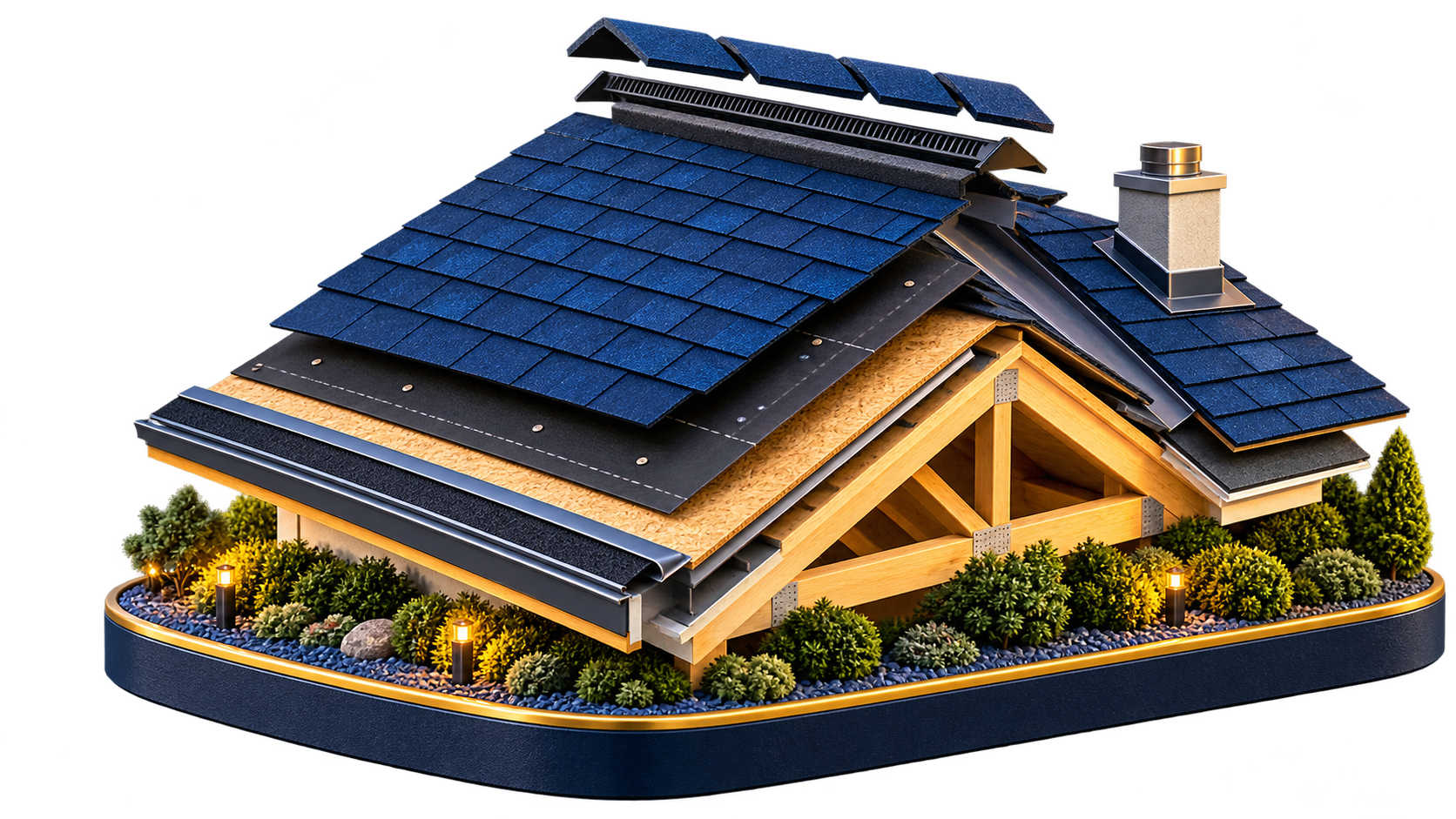
The shingle rating should be reviewed with the rest of the proposed roof system:
- The exact shingle and color available for the property.
- Compatible hip and ridge shingles, starter shingles, underlayment, ice and water protection, flashing, and ventilation.
- Roof-deck condition and any repair or replacement required before installation.
- Manufacturer application instructions and local code requirements.
- Wind rating and the installation details required to support it.
- Limited-warranty terms, exclusions, registration, transfer rules, and any contractor-credential requirements.
- Future repairability and the likelihood that the same product and color will remain obtainable.
- The insurer’s documentation requirements and any related policy endorsement.
What should DFW homeowners consider?
DFW homeowners comparing Class 3 and Class 4 shingles should confirm the exact product with their insurer before installation and preserve the product labels and required installation paperwork. Texas recognizes impact-resistant roof classifications, but the actual credit and documentation depend on the insurer and product.
Product availability also needs to be confirmed for the installation ZIP code. A product shown on a national manufacturer page may not be stocked locally in the selected color when the roof is scheduled.
What should Fort Wayne-area homeowners consider?
The National Weather Service maintains Indiana severe-weather records that include hail and wind reports dating to 1955. For a Fort Wayne-region roof, the decision should still use the property’s roof condition, product availability, complete system design, insurer requirements, and budget rather than a regional label by itself.
Pinnacle’s current Indiana working area is generally within approximately 50 miles of downtown Fort Wayne, subject to ZIP code and project confirmation. That working area does not represent statewide Indiana service or guarantee product availability at a particular address.
Which impact rating is right for a specific roof?
The appropriate choice depends on the roof, the complete installed system, the available products, the homeowner’s budget and risk tolerance, and the insurer’s written treatment of the exact product. A Class 4 product passes a higher laboratory impact level, but the final decision should be based on the complete proposal rather than the class number alone.
Pinnacle can review the roof condition, ZIP code, proposed IKO product, complete roof-system components, and the questions the homeowner should take to the insurer. Product availability and insurance treatment are confirmed for the individual project before a final recommendation.
Frequently asked questions
Is Class 4 the highest shingle impact rating?
Yes. Class 4 is the highest of the four impact-resistance classes under UL 2218.
Does Class 4 mean a roof cannot be damaged by hail?
No. Class 4 is a laboratory impact rating, not a hail-damage guarantee. IKO states that hail damage is excluded from its limited warranty.
Are Class 3 shingles impact resistant?
Yes, when the exact product is listed as meeting the Class 3 criteria under the applicable impact-resistance standard. The rating still does not guarantee performance in a particular storm.
Will insurance provide a discount for Class 3 or Class 4 shingles?
Possibly. The insurer must confirm whether the exact product, installation, documentation, and policy qualify. Discount amounts should not be assumed before that confirmation.
Are IKO Cambridge and Dynasty the same product?
No. IKO currently lists both as Class 3, but they are different shingle lines with different features and product documents. IKO lists Nordic as Class 4.
CTA
Sources
- UL Solutions and IBHS, residential roofing-shingle testing overview, reviewed October 30, 2026.
- IKO Cambridge product page, reviewed October 30, 2026; lists FM 4473/UL 2218 Class 3 and the hail-performance disclaimer.
- IKO Dynasty product page, reviewed October 30, 2026; lists FM 4473/UL 2218 Class 3 and the hail-performance disclaimer.
- IKO Nordic product page, reviewed October 30, 2026; lists FM 4473/UL 2218 Class 4, select-market availability, and the hail-performance disclaimer.
- Texas Department of Insurance, products qualifying for impact-resistant roofing credits, reviewed October 30, 2026; insurer-specific eligibility and documentation control.
- Texas Department of Insurance, Form PC068
- National Weather Service, Indiana severe-weather climatology