



A Practical Roof Maintenance Checklist for Homeowners
Start with a ground-level and interior roof check in spring and fall, then repeat it after major hail, wind, ice, or falling-branch events. Look for changes in the roof covering, flashing, drainage, ceilings, and safely accessible attic areas. Roof…
Discuss your project
Start with a ground-level and interior roof check in spring and fall, then repeat it after major hail, wind, ice, or falling-branch events. Look for changes in the roof covering, flashing, drainage, ceilings, and safely accessible attic areas. Roof access, shingle replacement, flashing repair, penetration work, and storm-damage repair belong with a qualified roofing professional.
No calendar replaces a property-specific review. Roof type, tree cover, drainage, previous repairs, weather exposure, access, and manufacturer instructions can change what needs attention and how often.
What can you check without walking on the roof?
Walk around the property only when conditions are safe. Use binoculars or a camera zoom if needed. Do not place a ladder near overhead wires, and stay away from downed lines or objects touching them.
From the ground, record visible changes such as:
- Missing, lifted, cracked, or displaced roof covering.
- A sagging roofline or a section that looks different from the last check.
- Bent, loose, missing, or corroded flashing around chimneys, walls, skylights, vents, and other roof openings.
- Gutters that sag, overflow, pull away, or hold debris, plus downspouts that do not move water away as intended.
- Branches, impact debris, or tree contact near the roof.
- Moss, algae, or other growth that needs manufacturer-appropriate review.
- Shingle pieces or unusual granule accumulation on the ground or in accessible drainage areas.
Date-stamped photos make it easier to compare a new concern with the prior condition. A ground-level check cannot confirm concealed deck conditions, structural capacity, attachment details, code compliance, or the cause of a leak.
What should you check inside the home?
Check ceilings and upper walls for new stains, peeling finishes, dripping water, or spreading damp areas. If the attic is authorized, safely accessible, and free of hazards, look from a stable walking surface for wet insulation, dark staining, sagging or swollen decking, daylight through an opening, or moisture near roof penetrations.
ENERGY STAR identifies wet insulation, moldy or rotted framing, difficult access, and little or no attic ventilation as conditions that should be corrected by a professional before a homeowner proceeds with attic work. Do not disturb suspected asbestos-containing material, damaged wiring, gas lines, unstable framing, or concealed areas.
How should gutters and drainage be maintained?
Gutters and downspouts need an open path for water to leave the roof edge. IKO recommends clearing debris and checking that downspouts flow. The correct cleaning method depends on safe access, the gutter system, nearby power lines, and the manufacturer's instructions.
Do not work from the roof edge to save time. The U.S. Consumer Product Safety Commission warns that falls and contact between ladders and overhead wires can cause serious injury or death. Professional work is appropriate when the gutter is high, access is unstable, the roof is steep, power lines are nearby, or the task requires reaching to the side.
What should be done about branches, moss, or algae?
Branches that rub the roof or can drop debris should be reviewed by a qualified tree professional when the work is high, near power lines, or outside safe ground access. There is no universal clearance distance because tree type, branch size, wind exposure, utilities, and roof geometry change the risk.
Moss and algae treatment depends on the roof material and manufacturer instructions. IKO warns against pressure-washing asphalt shingles because the spray can damage the granule surface. Do not apply a chemical mix or scrape the roof until the roof manufacturer and product instructions confirm the method.
Which option fits the condition?
| What you can confirm | Practical next step | Cost and trade-off |
|---|---|---|
| No material change from a safe ground or interior check | Keep dated photos and monitor after the next major weather event or seasonal check | Lowest immediate cost, but it cannot rule out concealed conditions |
| Debris or a drainage blockage that is safely reachable without roof access | Follow the component manufacturer's instructions or use a qualified professional | A do-it-yourself task may save labor but adds fall, electrical, and property-damage risk when access is poor |
| Missing or displaced material, changed flashing, recurring overflow, moisture, or suspected impact | Request property-specific professional review and a written scope | Adds professional cost, but it can define access limits, affected areas, and repair options before work starts |
| Active water entry, structural movement, gas odor, fire damage, or downed lines | Leave the affected area and use the appropriate emergency service or utility first | Immediate safety takes priority over ordinary roofing cost or scheduling |
PHS does not publish a universal maintenance or repair price because access, roof system, material, condition, and scope vary. Ask any contractor to separate observed conditions, limitations, proposed work, exclusions, and price in writing.

When should you call a roofing professional?
Arrange professional review when the check finds missing or displaced materials, changed flashing, a sagging area, recurring gutter overflow, interior moisture, suspected storm impact, tree contact, or a repair that requires roof access. Active water entry, visible structural movement, a gas odor, fire damage, or a downed power line requires immediate safety action through the appropriate emergency service or utility before ordinary roof work begins.
A written review should identify the observed condition, the area affected, access limits, and the recommended next step. It should not promise insurance coverage, diagnose concealed damage without the required investigation, or turn every maintenance concern into a replacement recommendation.
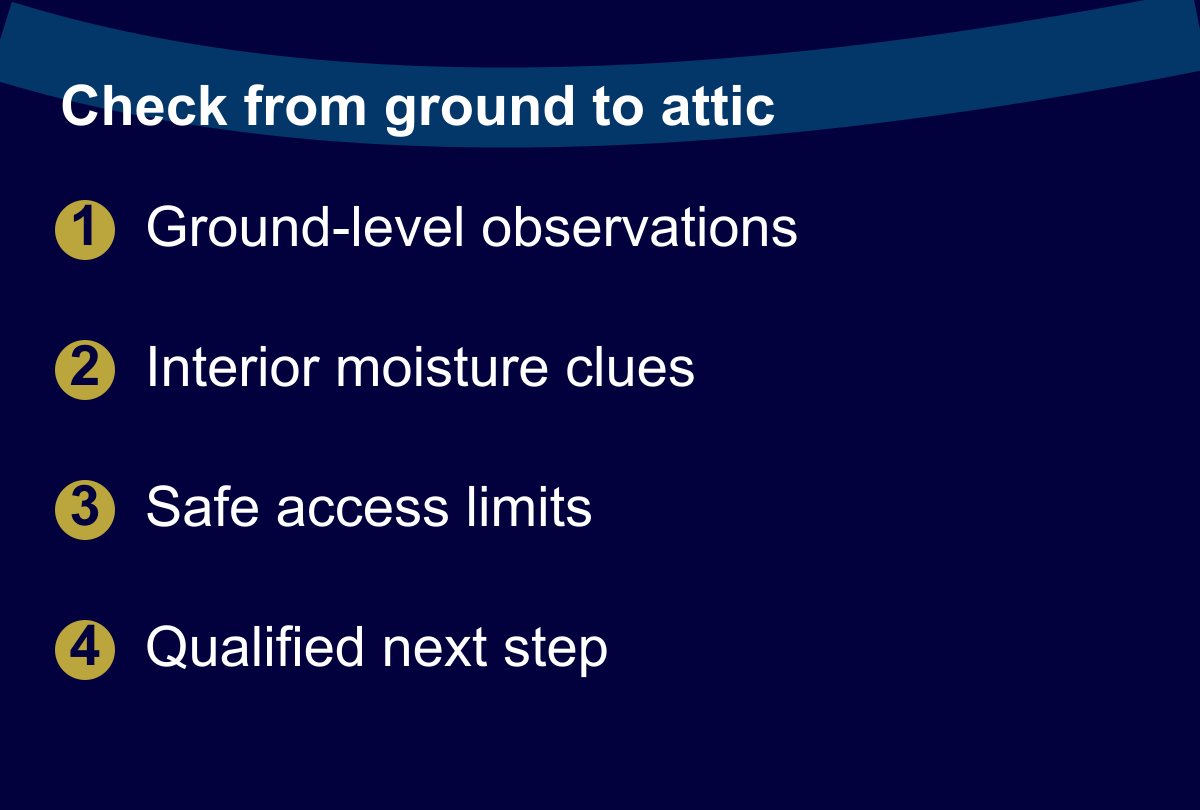
Check from ground to attic
- Ground-level observations
- Interior moisture clues
- Safe access limits
- Qualified next step
The PHS ground-to-attic roof maintenance screen
Pinnacle Home Services developed this six-part screen to help a homeowner record visible conditions before discussing repair or replacement. It is a decision record, not an engineering report, code inspection, insurance adjustment, or statement that a paid PHS assessment is available.
| Check | What to record | Escalation point |
|---|---|---|
| Safety first | Downed lines, gas odor, fire damage, unstable walls, falling debris, floodwater, or unsafe access | Leave the affected area and contact the appropriate emergency service or utility |
| Ground-level roof | Missing or displaced covering, changed roofline, debris, branch contact, and visible flashing changes | Professional review when a material change is visible or the view is incomplete |
| Drainage | Gutter alignment, overflow evidence, debris, downspout flow, and discharge location | Professional cleaning or repair when access is unsafe or drainage remains blocked |
| Interior and attic | Ceiling stains, wet insulation, dark decking, daylight, moisture, and access limits | Professional review for active moisture, rot, mold, wiring, gas, structural, or access concerns |
| Weather event | Date, hail, wind, ice, branch impact, visible changes, and photos | Repeat the check after the site is safe and route suspected impact to qualified review |
| Record and next action | Photo date, area, observed fact, limitation, and repair or monitoring question | Keep the record with the property file and obtain a written scope before work starts |
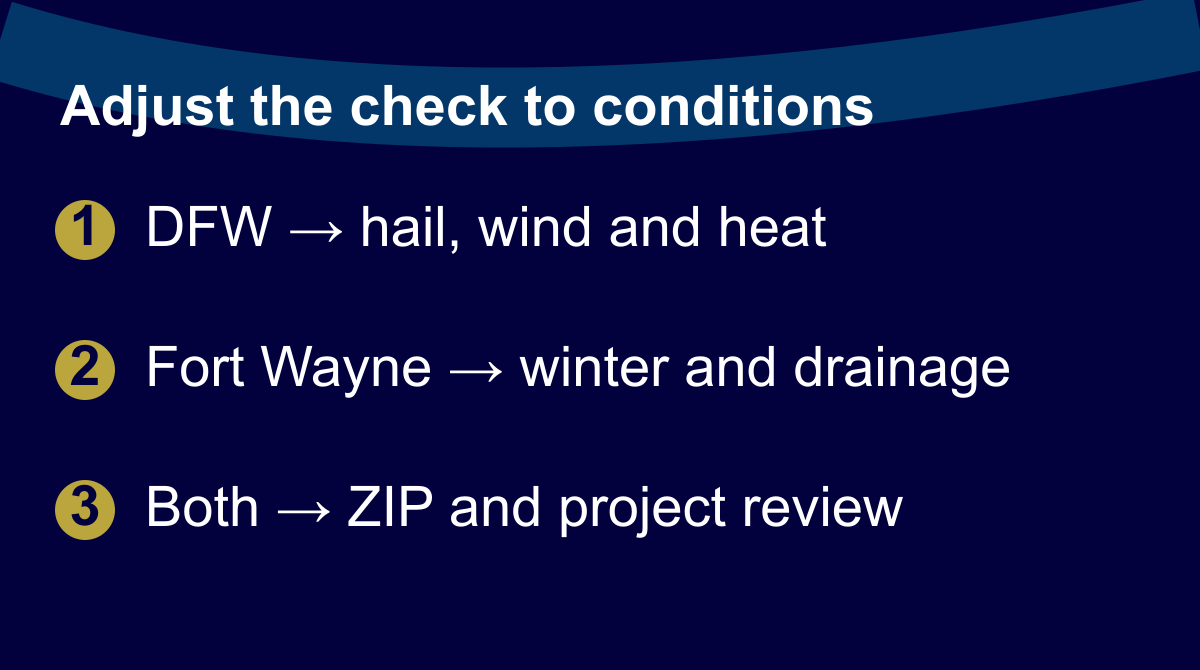
Adjust the check to conditions
- DFW → hail, wind and heat
- Fort Wayne → winter and drainage
- Both → ZIP and project review
DFW roof maintenance considerations
The National Weather Service Fort Worth office maintains separate safety guidance for hail, severe wind, heat, flooding, and winter weather. In DFW, repeat the ground-level check after a material hail, wind, or falling-branch event once conditions are safe. Keep the observation factual. Hail size, a weather alert, or a neighborhood report does not prove damage to one property.
Pinnacle's roofing availability in DFW remains subject to ZIP and project confirmation. This article does not promise emergency response, an insurance outcome, a specific repair, or service at every address.
Fort Wayne-region roof maintenance considerations
National Weather Service climate records for Fort Wayne document thunderstorms, high winds, snow, freezing conditions, and occasional freezing precipitation. A practical regional check includes drainage before freezing weather, visible roof and flashing changes after high wind or a branch impact, and safely accessible attic moisture indicators after winter.
Pinnacle's Fort Wayne-region roofing availability remains subject to ZIP and project confirmation. This does not establish statewide Indiana coverage or support separate city pages.
Plan the next roof decision
Use the maintenance record to separate what was observed from what still needs qualified review. If the check finds a material concern, use Pinnacle's contact page to provide the ZIP code, area affected, event date if relevant, and any safely captured photos. Pinnacle will confirm project fit before making a scope, schedule, price, warranty, or insurance statement.
Frequently asked questions
How often should a homeowner check the roof?
A spring and fall ground-level and interior check, plus a check after major hail, wind, ice, or branch impact, is a practical starting point. Roof type, weather exposure, tree cover, prior work, and manufacturer instructions may require a different schedule.
Can I clean asphalt shingles with a pressure washer?
IKO warns against pressure-washing asphalt shingles because it can damage their granule surface. Use only a method supported by the roof and treatment manufacturers, and keep unsafe roof access with a qualified professional.
Does a ceiling stain prove the roof is leaking?
No. A stain identifies a moisture concern, not its source. Plumbing, mechanical equipment, condensation, walls, windows, and roofing can require separate investigation.
Can PHS tell me the repair price from a photo?
A photo can help identify the area and visible concern, but it cannot establish access, concealed conditions, materials, quantity, or a complete repair scope. PHS must confirm project fit and the property-specific scope before giving price or warranty terms.
Should roof maintenance be handled before solar work?
If solar equipment is planned or already present, roof condition, remaining service life, penetrations, equipment access, removal and reinstall responsibilities, and warranty boundaries should be resolved before roofing or solar work proceeds. That is a real cross-trade dependency because one trade's access and attachments can affect the other's scope.