
Roof Replacement in the Fort Wayne Area: What to Check Before You Sign
Discuss your roof →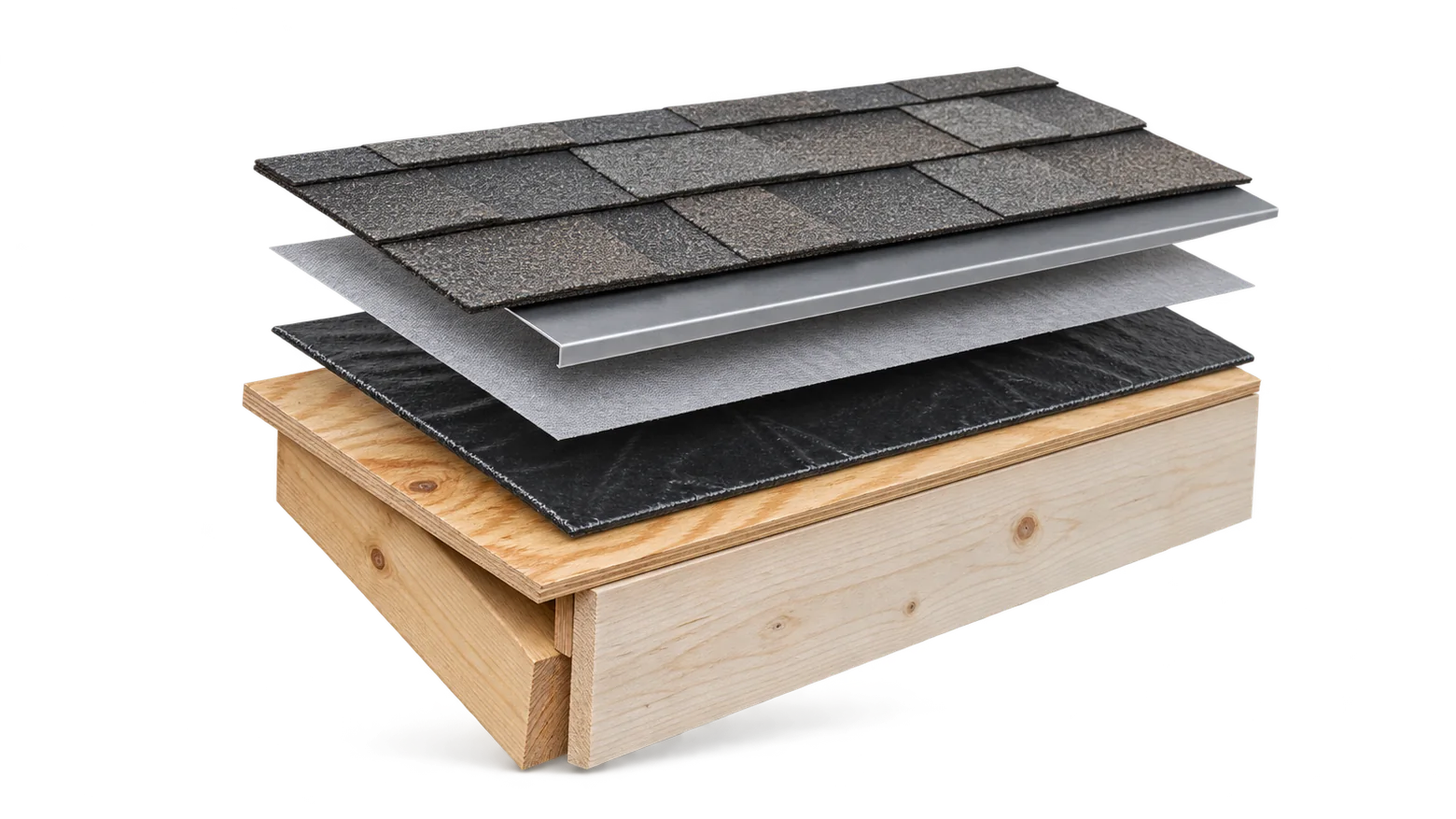
- 01Winter-ready scope
- 02Code and permit check
- 03Complete written contract
Should a Fort Wayne roof be repaired or replaced?
Repair a Fort Wayne-area roof when the problem is confined to an identifiable area, matching material is available, and the surrounding roof can take a durable repair. Plan for replacement when problems are spread across several slopes, the decking or flashing is failing, or repeated repairs keep leaving the roof exposed to the next winter. Roof age alone does not decide it, and neither does one photograph.
The Fort Wayne region adds its own test. A roof here has to shed an average of 33.6 inches of snow a year, work through long stretches of below-freezing weather, and meet an Indiana code requirement for an ice barrier along the eaves. A repair or replacement scope that does not address those conditions is incomplete, whatever it costs.
How does Fort Wayne weather affect a roof?
Most Fort Wayne roof problems trace back to snow, cold, storms, or moisture moving up from the house. Each one should show up as a specific line in a written scope.
| Local condition | What it does to the roof | What the written scope should state |
|---|---|---|
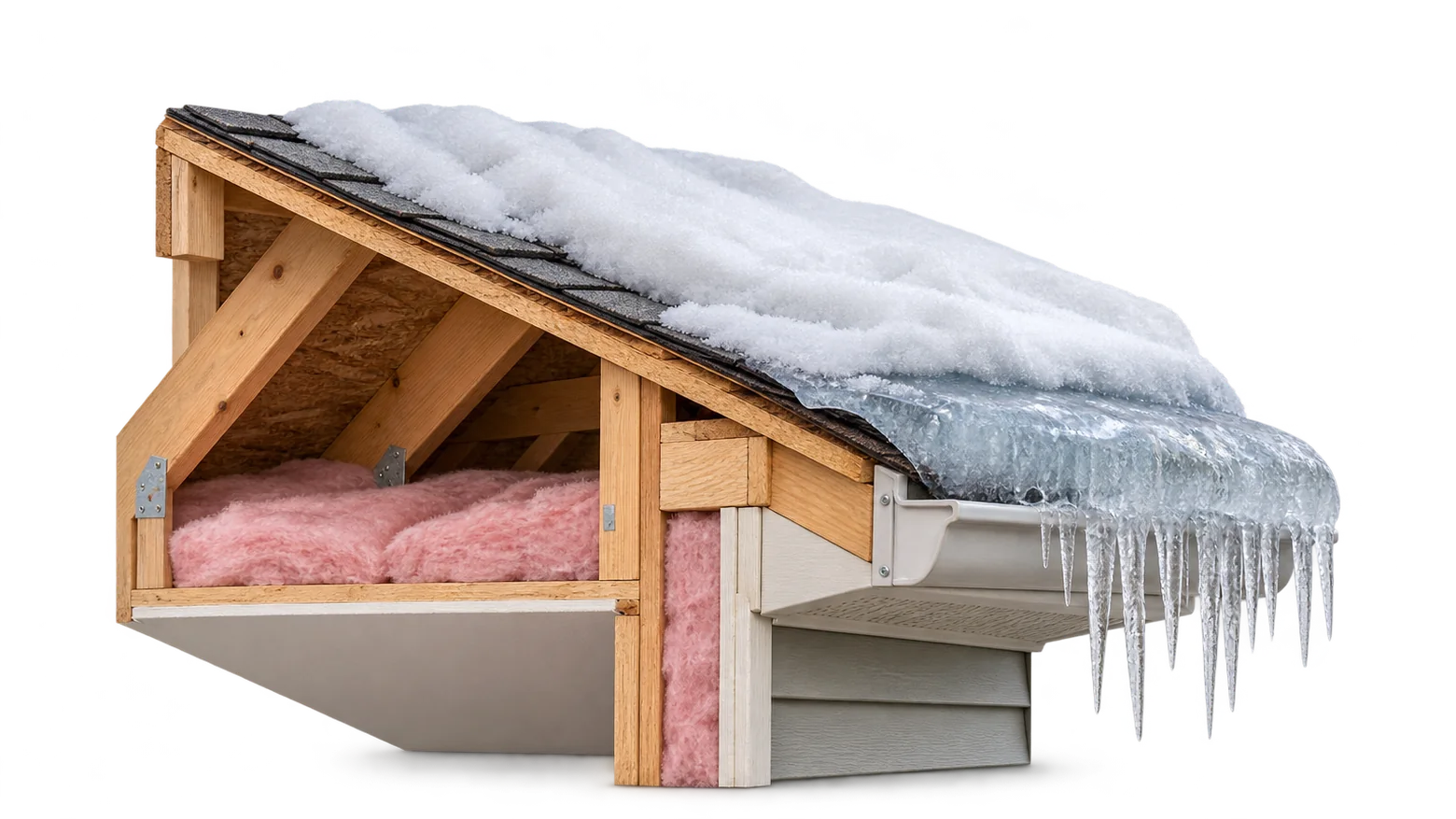
| Snow: Fort Wayne averages 33.6 inches a year | Heat escaping into the attic melts roof snow; the water refreezes at the colder eaves and can build an ice dam that backs water under the shingles | Ice-barrier coverage at the eaves, and how attic air sealing, insulation, and ventilation will be checked |
| Cold: January averages 22.9°F, with daytime highs near 30°F | Cold affects how shingles seal down and how sealants and adhesives perform during installation | Which manufacturer installation instructions the crew will follow if the work happens in cold weather, and how weather delays are handled |
| Storms: Indiana sees severe thunderstorms with hail and damaging wind | Lifted or missing shingles, damaged vents and flashing, and debris impact | Which roof areas were inspected, which could not be reached, and photographs tied to each finding |
| Moisture: warm, humid indoor air reaching a cold roof deck | Attic condensation, staining, and decking deterioration that stays hidden under the shingles | Whether the decking will be inspected at tear-off and how replacement decking is priced |
The ice-dam mechanism is why attic conditions belong in a roofing conversation. New shingles over an attic that leaks heat can still dam at the eaves. If the scope never mentions ventilation or insulation, ask why.
Which signs point to repair, and which to replacement?
One sign does not settle the question, but patterns do. Use this as a starting point for the conversation with whoever inspects the roof.
| What you see | Usually points toward | What to confirm first |
|---|---|---|
| Damage limited to one slope or a few shingles | A targeted repair | That matching shingles and accessories are available for your ZIP code |
| Curling, cracking, or heavy granule loss across several slopes | A replacement evaluation | Whether the pattern is age-related or storm-related, documented with photographs |
| Soft or sagging decking, or staining in the attic | A broader evaluation before any price | The decking condition and how replacement sheets will be priced at tear-off |
| Leaks only at a chimney, wall, or vent | A flashing repair may be enough | Whether the flashing can be replaced without disturbing the surrounding roofing |
| Repeated repairs in the same area | A replacement evaluation | Why earlier repairs failed and what the new scope does differently |
Each path has a cost. Replacement costs more up front, and removing the old roof often exposes decking problems that add to the price. A repair costs less, but new shingles may not match the old ones in color or texture, and a repair does nothing for the age of the rest of the roof. For a fuller decision method, see the roof repair or replacement guide.
What drives the price of a Fort Wayne roof replacement?
Pinnacle prices each roof from a measured scope rather than a published per-square-foot figure, because the variables below move the price more than the city does. A proposal you can compare should either price each item or state plainly that it is included:
- roof area, pitch, and the number of separate slopes and valleys;
- how many existing layers must be removed and disposed of;
- decking replacement found at tear-off, ideally as a stated price per sheet;
- ice-barrier and underlayment coverage;
- flashing at chimneys, walls, and penetrations, and any ventilation changes;
- the shingle line and its matching accessories;
- permit, access, protection of landscaping, and cleanup.
A low price that leaves out the decking allowance, the ice barrier, or the flashing is not comparable to one that includes them. Ask each contractor to show those three lines.
What do Allen County and Indiana require?
Permit. The Allen County Building Department’s residential permit guide lists roofing and siding among the work that requires a permit. Confirm in writing who pulls the permit and schedules any inspection. Properties outside Allen County should be checked with their own county or city.
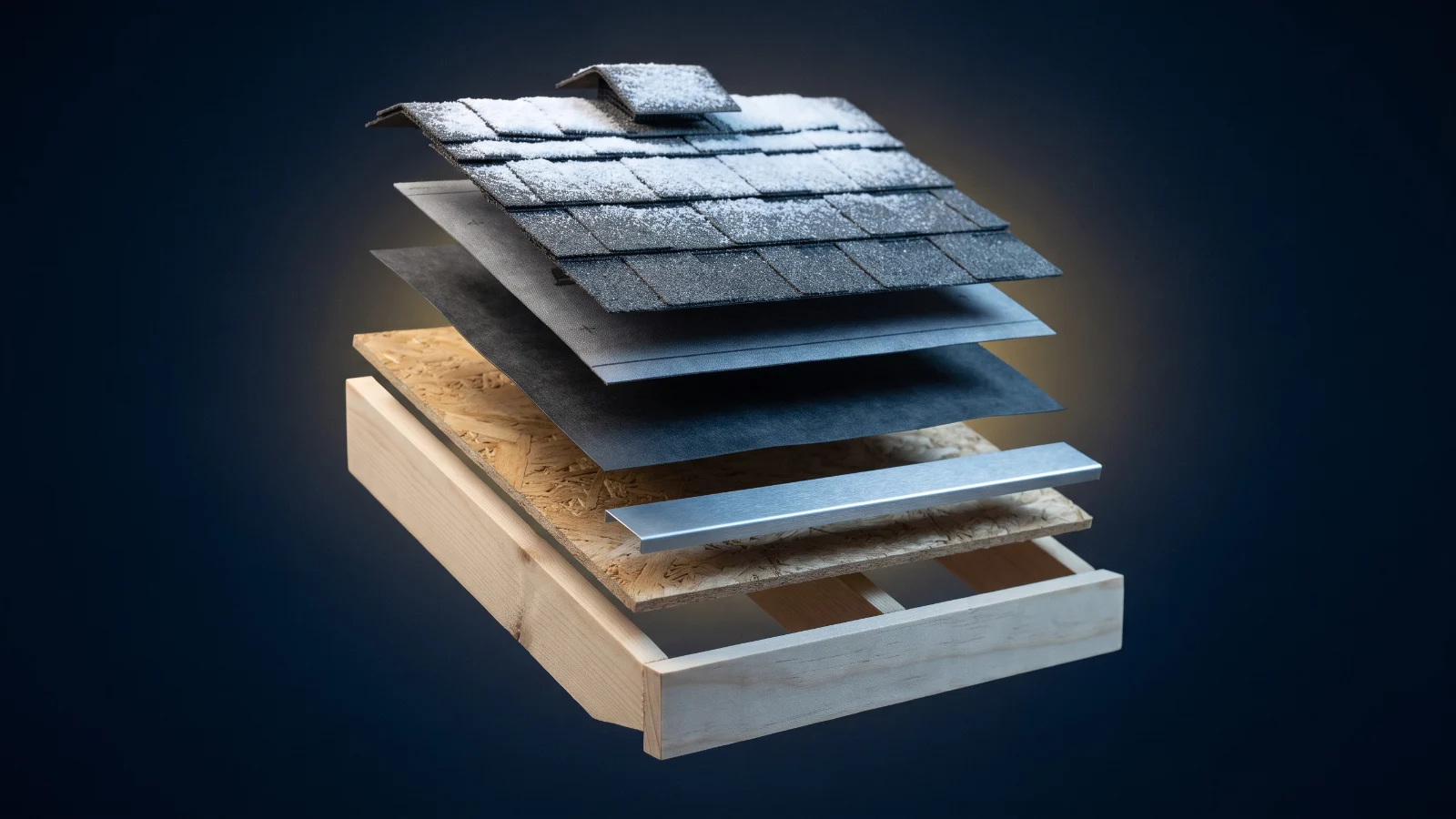
Ice barrier. Indiana’s residential code requires an ice barrier on asphalt-shingle roofs in Allen County. It must run from the lowest edges of the roof to a point at least 24 inches inside the exterior wall line, using either two cemented layers of underlayment or a self-adhering membrane. The proposal should say how this requirement will be met.
Re-covering an old roof. Indiana’s code does not allow a new roof layer over an existing roof that is water-soaked or too deteriorated to serve as a base, or over a roof that already has two or more layers.
The contract. Indiana’s Home Improvement Contracts Act requires a written contract that, among other things, names the homeowner and the property, identifies who at the contractor will handle questions, gives a reasonably detailed description of the work, states approximate start and completion dates and the contract price, says whether subcontractors or suppliers will furnish labor or materials, and reflects the full price less any discounts. When work will be paid from insurance proceeds, the contract must also state that the contractor may not initiate or pursue a claim with your insurance company. For storm-related work, see the Fort Wayne hail guide.
What if the roof has solar panels?
Replacing a roof under solar panels means the panels come off and go back on, so the roof and solar work have to be planned as one job. On these projects in both the Fort Wayne region and DFW, Pinnacle’s process records the system’s equipment and monitoring status before panels are removed, uses flashing and penetration details compatible with the new roof, and closes out with a recommissioning check once the system is reinstalled.
Whoever does the work, ask how they will show that the system worked before removal and works after reinstallation, and who is responsible for each roof penetration. The roof replacement and solar coordination guide covers the sequence in detail.
What should a Fort Wayne roofing proposal include?
Before signing, check that the written proposal covers:
- the property address and each roof area included;
- tear-off, the number of layers removed, and disposal;
- decking inspection and the unit price for replacement sheets;
- ice-barrier coverage at the eaves, underlayment, and valley treatment;
- flashing, vents, and any attic ventilation changes;
- the shingle line, color, and accessory components;
- who pulls the permit and schedules inspections;
- approximate start and completion dates and how weather delays are handled;
- price, deposit, payment schedule, and the change-order process;
- whether subcontractors or suppliers will furnish labor or materials;
- manufacturer and workmanship warranty documents you will receive.
If you are comparing impact-rated shingles, the Class 3 versus Class 4 shingle guide explains what the ratings do and do not mean.

Where does Pinnacle work around Fort Wayne?
Pinnacle’s current working area is generally within about 50 miles of downtown Fort Wayne, subject to ZIP code, scope, and project confirmation. This is not a claim of statewide Indiana coverage and does not guarantee availability at a particular address. See the roofing service page for the work Pinnacle offers.
When you reach out, include the property ZIP code, the roof’s approximate age, what you have noticed, and whether solar panels are on the roof. Pinnacle will confirm whether the address and scope are within the current working area before scheduling.
Frequently asked questions
Do I need a permit to replace a roof in Fort Wayne?
The Allen County Building Department’s residential permit guide lists roofing among the work that requires a permit. Confirm in the contract who obtains it.
Can a new roof go over the old one?
Not always. Indiana’s code does not allow it when the existing roof is water-soaked or deteriorated, or already has two or more layers. Even when it is allowed, a tear-off lets the decking be inspected.
Can a roof be replaced in a Fort Wayne winter?
Cold weather affects how shingles seal and how adhesives perform, so ask which manufacturer cold-weather instructions the crew will follow and what happens to the schedule if conditions are not suitable.
Will new shingles stop ice dams?
Not by themselves. The ice barrier limits damage when a dam forms, but dams start with heat escaping into the attic. Air sealing, insulation, and ventilation address the cause.
Will Pinnacle handle my insurance claim?
No. Your insurer decides coverage and payment, and Indiana law bars the contractor on insurance-paid work from initiating or pursuing a claim with your insurer. Pinnacle can document construction conditions and prepare a written scope.
Request a roof review in the Fort Wayne area
Send your ZIP code, the roof’s approximate age, what you have noticed, and whether solar panels are on the roof. Pinnacle will confirm Fort Wayne-region availability and the next step before scheduling.
Sources
- National Weather Service, Fort Wayne climate, reviewed November 15, 2026.
- National Weather Service, Indiana severe-weather climatology
- U.S. Department of Energy Building America Solution Center, ice dam prevention, reviewed November 15, 2026.
- Allen County Building Department, residential permit guide, reviewed November 15, 2026.
- Indiana Department of Homeland Security, ice and water shield update to the Indiana Residential Code, reviewed November 15, 2026.
- Indiana Residential Code 2020, chapter 9 roof assemblies (section R908.3.1.1), reviewed November 15, 2026.
- Indiana Code 24-5-11-10, home improvement contract requirements, reviewed November 15, 2026.