

- 01Condition and cause
- 02Repair feasibility
- 03System-wide scope
A localized roof condition may support repair when the affected area can be identified, compatible materials are available, and the repair can follow manufacturer instructions and applicable code. Replacement evaluation becomes more likely when conditions are widespread, repeated repairs have failed, compatible materials are unavailable, or decking and related roof components require extensive work. A site assessment is needed before either recommendation is reliable.
Roof repair or replacement at a glance
| Factor | Repair evaluation may make sense | Replacement evaluation may make sense |
|---|---|---|
| Extent | One limited, accessible area | Conditions across multiple slopes or roof systems |
| Materials | Compatible product and repair method are available | Existing material is unavailable or incompatible |
| Surrounding roof | Surrounding roof remains serviceable | Broader deterioration or repeated failures are present |
| Decking and components | Limited work can address the condition | Extensive decking, flashing, ventilation, or underlayment work is expected |
| Installation requirements | Repair can follow manufacturer instructions and code | A compliant repair would disturb a large part of the roof |
| Prior work | No pattern of failed repairs | Multiple repairs have not corrected the problem |
These factors guide the assessment. They do not determine the answer before the roof is inspected.
What caused the roof problem?
The first step is separating the observed condition from the assumed cause. An active leak may come from damaged roofing, flashing, a penetration, a wall transition, ventilation equipment, condensation, plumbing, or another source. Hail, wind, debris, age, installation conditions, maintenance, and prior repairs can create overlapping evidence.
A written assessment should identify what was observed, where it was observed, which areas were inaccessible, and what further work is needed to confirm the cause. A storm date near the property does not prove that the storm caused a specific roof condition.
When can a roof repair be considered?
Repair evaluation may be reasonable when:
- The affected area is limited and safely accessible.
- Compatible materials and a manufacturer-accepted repair method are available.
- The surrounding roofing remains serviceable.
- Flashing, underlayment, decking, ventilation, and nearby penetrations can be addressed without disturbing a large portion of the roof.
- The repair can follow applicable code and does not depend on concealing a broader condition.
An exact color or weathered appearance may be impossible to match even when a functional repair is possible. Insurance matching questions belong with the insurer and the actual policy.
When should replacement be evaluated?
Replacement evaluation becomes more likely when:
- Conditions appear across multiple slopes or throughout the roof system.
- Several prior repairs have not corrected water entry or recurring failures.
- The existing product is unavailable, discontinued, or incompatible with a reliable repair.
- Decking, flashing, underlayment, ventilation, or accessories require extensive work.
- Repair would disturb a substantial portion of the roof or conflict with manufacturer instructions.
- The roof has broad service-life problems in addition to one visible defect.
Replacement should not be recommended from age alone. Product, installation, ventilation, exposure, maintenance, repairs, and current condition all affect roof service life.
Does roof age decide whether replacement is required?
No. Roof age is one part of the assessment. There is no single age at which every roof must be replaced.
An older roof may still have a localized repairable condition. A newer roof may have installation, storm, ventilation, flashing, or decking problems that require broader work. The assessment should describe the physical evidence instead of using age as a substitute for inspection.
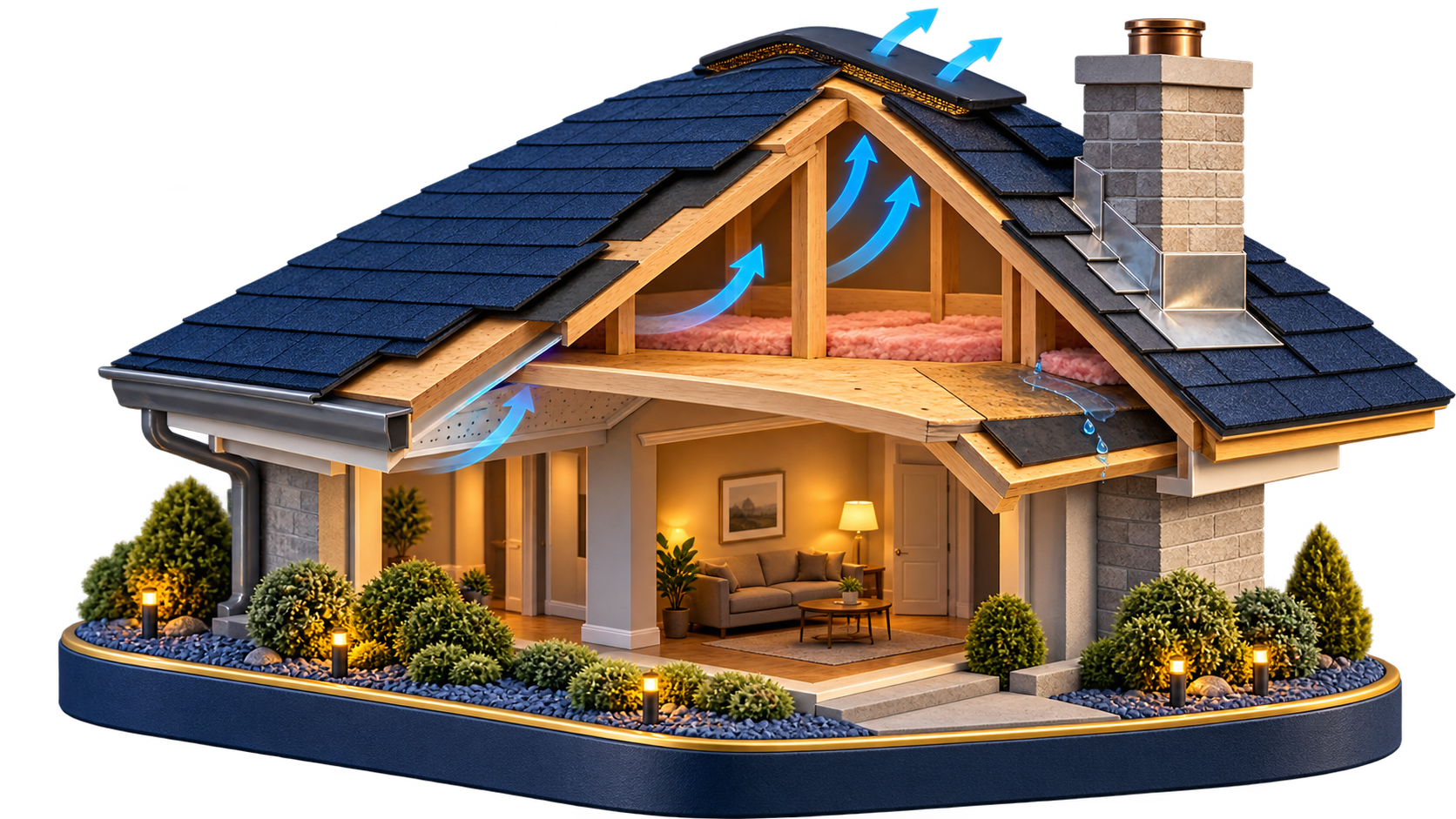
How do decking, flashing, and attic conditions affect the decision?
The visible roof covering is one part of the roof system. Decking supports the roof covering, flashing manages water at transitions, underlayment provides a secondary layer, and ventilation affects heat and moisture movement. Penetrations for plumbing, mechanical equipment, electrical components, skylights, and solar equipment add repair boundaries.
Safely accessible attic observations can reveal staining, wet materials, visible deck conditions, ventilation concerns, and lines near the underside of the roof deck. Concealed areas and unsafe areas remain limitations. A separate pre-installation roof-deck hazard check is still needed before roofing fasteners are installed.
Does storm damage automatically require roof replacement?
No. Hail or wind does not establish that the entire roof requires replacement. The type, location, concentration, and extent of the observed conditions matter, along with repairability and the condition of the surrounding roof.
A roofing contractor can document construction conditions and prepare a repair or replacement scope. The insurer applies the policy and decides coverage and claim payment. A contractor recommendation does not determine the insurer’s legal obligation.
What should DFW homeowners consider?
DFW homeowners may be evaluating roof conditions after hail, high wind, debris impact, heat exposure, or a new leak. The same repairability rules apply. The working Pinnacle service area is generally within about 50 miles of DFW International Airport, subject to ZIP and project confirmation.
Texas homeowners should review the actual wind-and-hail deductible and whether roof coverage uses replacement cost or actual cash value. Pinnacle must not promise coverage, claim value, deductible relief, or an insurance outcome.
What should Fort Wayne-area homeowners consider?
Fort Wayne-area homeowners may be evaluating hail, wind, falling debris, snow or ice exposure, flashing problems, or age-related conditions. The working Pinnacle service area is generally within about 50 miles of downtown Fort Wayne, subject to ZIP and project confirmation.

How should written recommendations be compared?
Compare the evidence and scope behind each recommendation, including:
- Photos and written findings tied to specific roof areas.
- Proposed repair boundary or replacement boundary.
- Exact roofing products and accessory components.
- Decking, flashing, ventilation, underlayment, and penetration work.
- Exclusions, concealed conditions, and change-order process.
- Workmanship and manufacturer warranty documents.
- Payment schedule and responsibility for permits or code-required work.
A lower price may reflect a smaller scope, different materials, missing accessories, or broader exclusions. The written scope should make those differences visible.
What should you provide when requesting a roof-project review?
Homeowners can provide the property ZIP code, the approximate date and type of concern, whether water is entering the home, and what can be observed safely. Pinnacle will confirm whether the property and requested roofing scope fit the current service area before proposing a next step. This request does not promise a paid assessment, inspection report, coverage outcome, repair recommendation, or replacement recommendation.
Frequently asked questions
Does one leak mean the roof needs replacement?
No. Water entry can originate at the roof covering, flashing, a penetration, a wall transition, ventilation equipment, plumbing, condensation, or another source. The observed condition and repair boundary need to be identified before repair or replacement can be compared reliably.
Can a roof be repaired if the same shingle color is unavailable?
A functional repair may still be possible when a compatible product and manufacturer-accepted method are available, but an exact color or weathered appearance may not match. The actual product, repair method, and insurer requirements must be checked for the property.
Does an older roof automatically require replacement?
No. Age is one input beside current condition, repair history, material availability, decking, flashing, ventilation, installation requirements, and the proposed scope.
Does hail automatically mean the whole roof should be replaced?
No. The location, concentration, extent, material response, repairability, and surrounding roof condition matter. The insurer separately decides coverage and claim payment under the policy.
Discuss the roof condition and proposed scope
Homeowners in the DFW or Fort Wayne region can provide their ZIP code and what they observed. Pinnacle will confirm service availability and the appropriate next step before scheduling or recommending work.
Sources
- International Code Council, 2024 IRC scope and repair provisions, reviewed October 30, 2026.
- Insurance Institute for Business & Home Safety, natural weathering and hazard exposure, reviewed October 30, 2026.
- Texas Department of Insurance, insurance and your roof.
- Indiana Department of Insurance, insurance claim tips, reviewed October 30, 2026.
- Allen County Building Department, 2026 residential permit guide, reviewed October 30, 2026.