
Insulation
Insulation for Your Home. Start With the Building.
An insulation project should begin with the area being improved, the existing assembly, and any moisture or access concerns. The right material and installation scope depend on the actual property. Pinnacle confirms the requested work and current availability before a project moves forward.
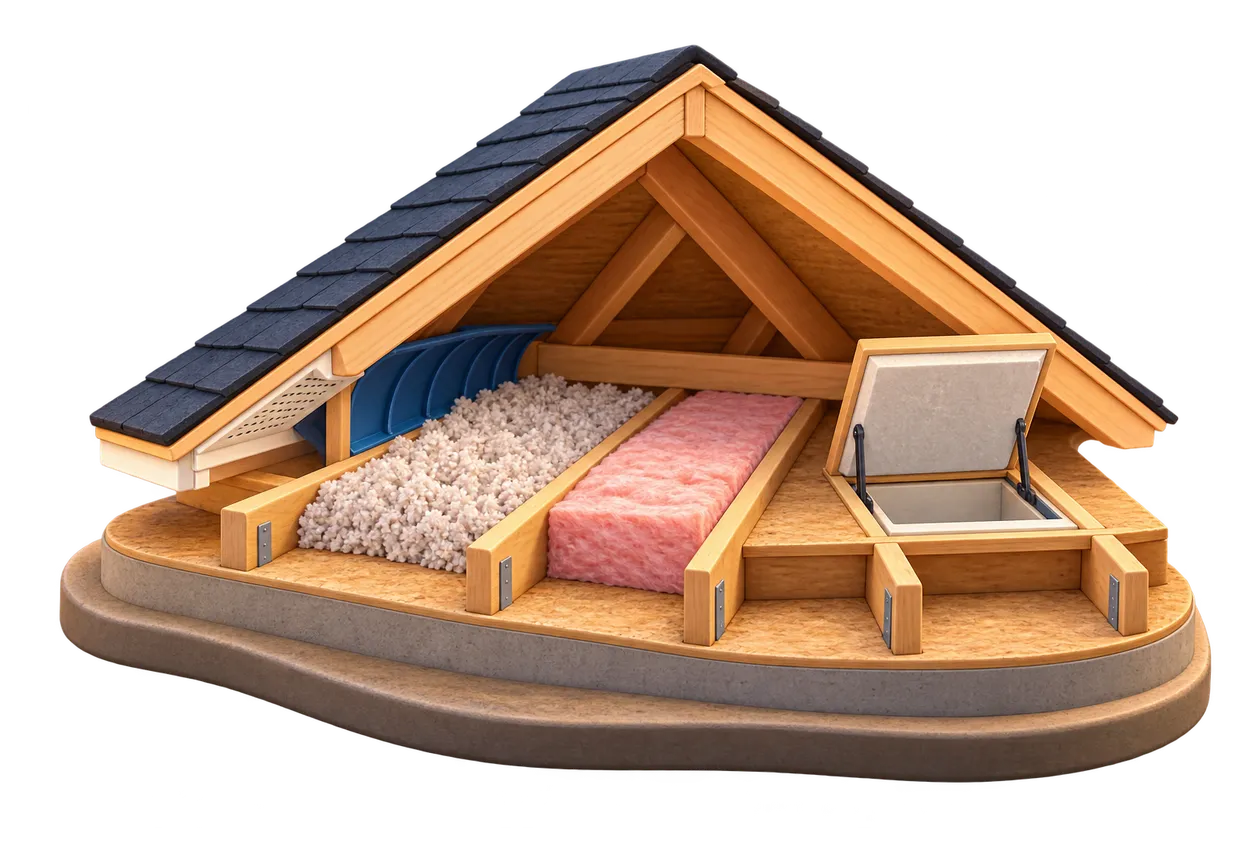
Find the boundary
Insulation That Fits. Review the Assembly.
More insulation is not a complete plan when air leakage, moisture, ventilation or access still need to be addressed.
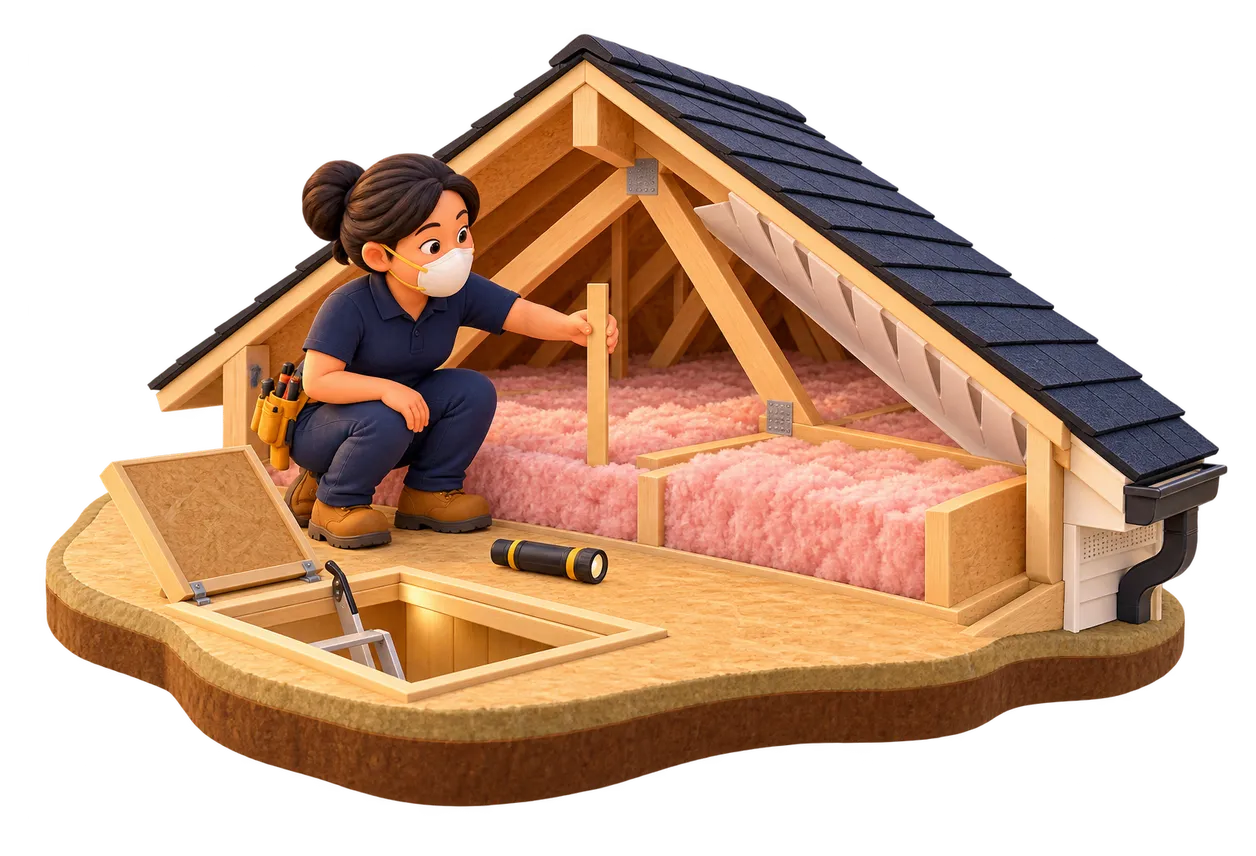
Describe the concern in the rooms you use. Note a draft, a room that feels different from the rest of the house, or an area you are opening during other work. These observations can help frame a review, but they do not prove that insulation is missing or establish the correct treatment. The same symptom can have different causes.
Identify the part of the building under consideration. An attic floor, an exterior wall cavity, a crawl space and a basement can have different construction and moisture conditions. An insulation product suitable for one assembly is not automatically the answer for another. The proposal should name the area and explain how the work fits the assembly.
The Department of Energy treats air sealing, moisture and ventilation as connected considerations in insulation work. ENERGY STAR also identifies specific attic safety and equipment conditions that need professional attention. Existing leaks, staining, suspect material, or equipment clearances should be reviewed before work conceals them. A photo can document a concern, but it cannot verify a hidden condition.
Compare the areas
Choose the Right Material. Match the Location.
The area being improved changes the access, preparation and installation questions.

For an attic request, ask whether the proposal describes the attic floor, roofline, access hatch, or another boundary. Confirm the area to be treated and how existing material will be handled. Discuss air-sealing work, ventilation paths and relevant equipment conditions. A depth or product name alone does not describe the complete work.
For wall insulation, identify whether cavities are open during remodeling or whether the walls will remain finished. Access affects how a project can be carried out and what repairs to finishes may be needed. The Department of Energy describes different approaches for existing walls and walls opened during renovation. Ask which access and finish-restoration work is included in the actual proposal.
For crawl-space or basement work, discuss the building configuration and any water or moisture concern before choosing a product. The review should establish the intended boundary and the limitations of the proposed work. Insulation is not a substitute for resolving a water-entry problem. Do not enter a confined or unsafe space to gather information for a request.
A spray-foam inquiry needs an assembly-specific discussion. Ask which product and area are proposed, what preparation and occupant restrictions apply, and which product documents govern the installation. Pinnacle does not promise that a particular material is appropriate or available for every home. The accepted written scope should resolve those details.
Define the work
Compare the Full Scope. Include the Preparation.
Use the same area and installation boundaries when comparing proposals.
Ask the provider to identify the existing conditions, the area of work and the proposed material. Record the intended installed performance where the actual product and assembly support it. There is no universal R-value recommendation on this page. Climate, construction, code requirements and existing conditions must be evaluated for the project.
Clarify whether the proposal includes removal, disposal, air sealing, access work, protection of the occupied home, and restoration of finishes. If an item is excluded, keep that exclusion beside the total price. A comparison becomes misleading when one proposal includes preparation that another leaves for a separate contractor.
Discuss how unknown conditions are handled. The work may depend on safe access or on information that becomes available only during an assessment. Ask how a new finding will be documented, who decides the response, and whether the scope or schedule needs revision before work continues. Record changes in writing.
Keep the product documents with the installation terms. Ask what the installer will provide at completion and which limitations apply to the specific work. Energy savings depend on the home and the combined conditions. No percentage reduction, utility-bill result, rebate or financing term is promised here.
| What to compare | What to ask for | Why it matters |
|---|---|---|
| Area and boundary | Attic floor, wall, crawl space, basement or other stated assembly | Compare work on the same part of the home |
| Material and installation | Product, area, proposed performance and assembly limitations | Understand what is being installed |
| Preparation and access | Removal, air sealing, protection, disposal and finish repairs | Avoid comparing incomplete totals |
| Moisture and equipment | Observed concerns and items requiring separate review | Resolve dependencies before concealment |
Sequence the project
Review, Prepare, Then Install. Keep Other Work in View.
Insulation often intersects with roof, HVAC, window or remodeling decisions. Mention planned work early.
If walls or ceilings will be opened for remodeling, tell the person reviewing the insulation request. That can affect access and the sequence of work. Keep the proposed insulation scope separate from the renovation scope so responsibilities remain clear. The fact that two trades can be coordinated does not mean either service has already been accepted.
If the concern involves attic moisture or a roof leak, share the existing findings and any planned roofing review. If heating or cooling equipment is located in the area, identify it without moving or disturbing anything. The project should not proceed on an assumption that hidden conditions are already resolved.
For a first request, provide the ZIP code, the area you want reviewed, available photographs, any existing inspection information, and your intended timing. Pinnacle will confirm material and service availability for the project. The next step may require more information before an installation scope can be proposed.
service
Comprehensive Insulation Services
Attic, wall, crawl-space, basement, and spray-foam requests require a property-specific review. Material, R-value, air-sealing, ventilation, moisture, code, and safety recommendations must be based on the actual property and approved scope.
Attic Insulation
Discuss attic insulation needs and current service availability.Discuss Attic InsulationWall Insulation
Tell us about your wall-insulation goals and property type.Discuss Wall InsulationCrawl Space & Basement Insulation
Review insulation needs below the main living space.Discuss Below-Grade InsulationSpray Foam Insulation
Ask whether spray foam is appropriate and available for your project.Discuss Spray FoamStraight answers
Insulation Questions. Plan With Better Information.
Will adding insulation fix every comfort problem?
No. Comfort can involve air leakage, moisture, air distribution, equipment or other building conditions. An insulation review should identify the problem being addressed and the limits of the proposed work.
What R-value should my home have?
The appropriate recommendation depends on the building assembly, existing material, location and applicable requirements. This page does not provide a universal R-value or product prescription. Ask for an assembly-specific explanation in the proposal.
Should air sealing be discussed with attic insulation?
Yes. Department of Energy and ENERGY STAR guidance discuss air sealing as part of an attic improvement. The appropriate work still depends on the assembly and safety conditions. The accepted scope should identify what is included.
Can existing insulation remain?
That depends on its condition, the proposed assembly and the accepted installation method. Tell the reviewer about known moisture, contamination or previous work. A photograph alone cannot establish whether existing material should remain.
Is spray foam always the best option?
No material is the universal answer. Ask about the specific product, assembly, installation conditions and limitations. Suitability and availability must be confirmed for the actual project.